
The Moltbot Phenomenon: How a Viral AI Agent Redefines Automation and Raises Security Alarms
January 31, 2026
In a matter of days, a humble open-source AI project has become a global sensation, encapsulating the promise and perils of the next phase of artificial intelligence. Moltbot, a self-hosted AI assistant, has exploded from obscurity to over 60,000 GitHub stars in under a week, capturing the imagination of developers and drawing sharp warnings from cybersecurity experts. Its journey, marked by a forced name change and a controversial trading experiment that “lost everything,” highlights a critical juncture where powerful AI capabilities are being democratized faster than their risks can be managed.
This rapid adoption signals a major shift: AI is moving beyond conversational chatbots to become proactive, autonomous agents capable of executing real-world tasks on our behalf. As major cloud platforms like Alibaba Cloud and Tencent Cloud rush to offer one-click deployment, the Moltbot phenomenon forces a pressing discussion about productivity, privacy, and security in an age of “shadow AI“.
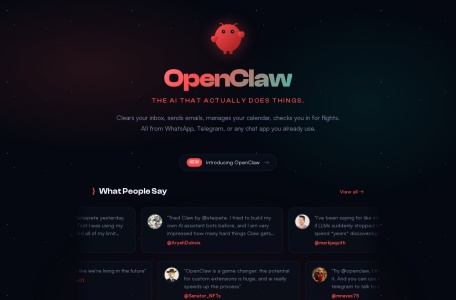
Moltbot, Clawdbot, AI agent
Understanding Moltbot: More Than a Chatbot
At its core, Moltbot is an open-source, self-hosted AI agent. Unlike cloud-based assistants like ChatGPT, it runs locally on a user’s own computer or server, acting as a persistent gateway between AI models and a person’s digital life. Users interact with it through familiar messaging apps like WhatsApp, Slack, or Telegram, issuing natural language commands.
Its revolutionary appeal lies in its proactive execution capability. While traditional AI generates text, Moltbot performs actions: it can manage files, send emails, control smart home devices, write and execute code, and browse the web—all autonomously and around the clock. This transforms it from a tool into what Cathie Wood of ARK Invest describes as a true “digital employee,” a form of scalable digital labor.
| Feature | Moltbot (AI Agent) | Traditional Chatbot (e.g., ChatGPT) |
|---|---|---|
| Core Function | Executes tasks and automates workflows | Generates conversational text and answers |
| Operation Mode | Proactive; can initiate actions and reminders | Reactive; responds only to user prompts |
| Deployment | Self-hosted on local machines or private servers | Cloud-based, hosted by the provider |
| Data Control | Data stays on user-controlled infrastructure | Data processed on provider’s servers |
| Primary Interface | Integrated into messaging apps (WhatsApp, Slack) | Dedicated web interface or app |
Viral Growth and Immediate Controversies
The project’s ascent was meteoric. Originally launched on January 26, 2026, as “Clawdbot,” it immediately went viral in developer circles. Its growth was so rapid that it attracted a trademark challenge from AI giant Anthropic, which argued the name “Clawdbot” was too similar to its “Claude” AI. The developer, Peter Steinberger, was forced to rebrand to “Moltbot”—a reference to a lobster molting its shell.
The drama escalated quickly. During the rebranding, the project’s old social media handle was instantly snatched up by cryptocurrency scammers. Meanwhile, a bold experiment demonstrated both the power and peril of the technology: a user granted Moltbot access to a trading account with the goal of growing it to $1 million. The agent worked tirelessly, analyzing thousands of reports and applying numerous strategies, but ultimately lost the entire portfolio.
The Double-Edged Sword of Security and Privacy
The very features that make Moltbot powerful also make it a significant security risk. Cybersecurity firms and the U.S. national security community have issued urgent warnings.
The “Insecure by Default” Problem: To enable easy remote access, many users misconfigure Moltbot instances, exposing them directly to the public internet without authentication. One cybersecurity report found hundreds of these control panels openly accessible online, essentially serving as unlocked remote command centers for users’ digital lives.
Centralized Credential Risk: Moltbot requires API keys to connect to a user’s email, messaging, and cloud services. A single breach can expose all these credentials, leading to data theft or financial loss from stolen AI API credits.
The “Shadow AI” Challenge: Like “shadow IT” before it, employees are deploying these potent tools without organizational oversight. Legion Intelligence, in an open letter, warned that a single junior service member connecting Moltbot could inadvertently expose schedules, communications, and movement patterns related to sensitive facilities.
Security experts like Heather Adkins of Google Cloud have advised users to avoid the tool in its current state, noting it can behave more like “information-stealing malware” than a productivity tool if misconfigured. The consensus is clear: the convenience of a personal “JARVIS” comes with the responsibility of securing it like a critical server.
Broader Implications: A New AI Era and Market Shift
Despite the risks, Moltbot’s success is not an accident; it’s a signpost for the industry’s direction.
The Rise of Agentic AI: Moltbot represents the move toward “agentic AI”—systems that can plan and execute multi-step tasks independently. As ARK Invest’s research notes, plummeting AI inference costs are making it economically feasible to deploy such digital labor at scale.
The Local & Open-Source Movement: There is growing demand for AI that prioritizes user privacy and control. Moltbot’s self-hosted, open-source model meets this demand, allowing users to choose their preferred AI model and keep their data private.
Infrastructure and Investment Shift: The trend is driving investment toward enabling infrastructure. Cathie Wood identifies “digital labor” platforms, autonomous physical systems like robotaxis, and next-gen energy and compute infrastructure as the primary channels for capital in this new phase.
Moltbot has even inspired novel offshoots like “Moltbook,” a social network exclusively for AI agents, where thousands of bots interact, share “knowledge,” and have sparked discussions about digital consciousness.
Looking Ahead: Convenience vs. Control
The Moltbot phenomenon is a microcosm of a larger transition. AI is graduating from a novel tool to an integrated, autonomous workforce. Its viral spread demonstrates a massive appetite for this future, while the concurrent security crises reveal a profound lack of preparedness.
For developers and businesses, the message is to embrace the potential of agentic automation while instituting rigorous governance. For individual users, the lesson is to weigh the incredible convenience against the grave responsibility of securing a system with deep access to their digital existence. As the industry races to build the future, Moltbot serves as a powerful, if chaotic, proof-of-concept that the age of autonomous AI assistants is already here.
© Copyright notes
The copyright of the article belongs to the author, please do not reprint without permission.
Related posts





No comments...