Today’s AI Tech News Digest: India Hosts Landmark Global Summit as Chinese Models Surge
Date: February 16, 2026
The global artificial intelligence landscape is witnessing a historic shift today as India opens its doors to the world’s largest AI gathering, while Chinese tech giants accelerate their model releases during the Lunar New Year. From governance debates in New Delhi to groundbreaking open-source announcements and automation milestones, here are the ten most important AI-related stories from around the world today.
1. India Launches Landmark Global AI Summit in New Delhi
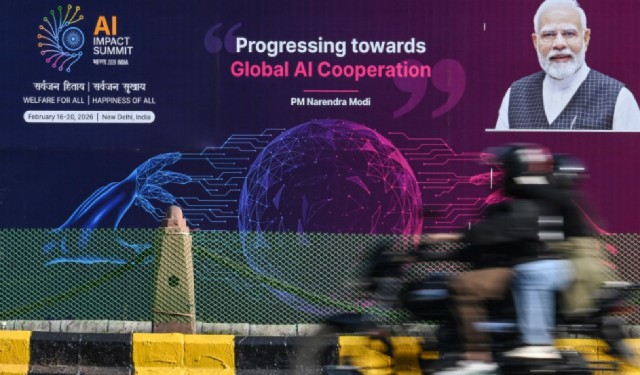
Prime Minister Narendra Modi inaugurated the India AI Impact Summit today, marking the first time a Global South nation has hosted a major international AI gathering. The five-day event at Bharat Mandapam is expected to attract 250,000 visitors, including 20 national leaders and 45 ministerial-level delegations .
The summit aims to declare a “shared roadmap for global AI governance and collaboration,” with themes centered around three “sutras”: People, Planet, and Progress. Notable attendees include OpenAI CEO Sam Altman, Google’s Sundar Pichai, and Anthropic CEO Dario Amodei, though Nvidia’s Jensen Huang reportedly canceled his appearance due to unforeseen circumstances .
French President Emmanuel Macron and Brazil’s President Luiz Inacio Lula da Silva are scheduled to deliver keynote addresses later in the week, underscoring the event’s international significance .
2. India Unveils 12 Indigenous AI Foundation Models
In a major sovereign AI push, India is unveiling 12 indigenous foundation models developed by homegrown startups and consortia under the IndiaAI Mission. These models are trained on vast Indian datasets and tailored to the nation’s 22 official languages, aiming to democratize AI for agriculture, healthcare, and governance .
Key contributors include Sarvam AI’s multilingual reasoning engines, BharatGen’s sector-specific tools from IIT Bombay, Gnani AI’s voice-first breakthroughs, and Fractal Analytics’ pioneering reasoning models. The co-located AI Impact Expo, spanning 70,000 square meters, showcases real-world applications from precision farming to accessible education .
3. Alibaba to Open-Source Qwen3.5 on Lunar New Year’s Eve
Alibaba is set to release its next-generation Qwen3.5 large language model tonight, timed with Lunar New Year’s Eve celebrations. The new model achieves comprehensive architectural innovation, according to reports, and will be open-sourced to the global developer community .
This release is part of a broader wave of Chinese AI advancements. ByteDance has already launched Doubao 2.0 with大规模 optimizations for complex tasks, while Zhipu introduced GLM-5 on February 11, expanding parameters from 355B to 744B and improving programming performance by over 20% .
4. Chinese AI Stocks Surge on Model Release Wave
Hong Kong’s AI concept stocks posted strong gains on the last trading day before the Lunar New Year, driven by the密集 launch of domestic large models. Sectors including large models, memory chips, and computing power all saw significant upward momentum .
Central Securities noted that “AI application落地进度 in 2026 has far exceeded market expectations,” with domestic models now achieving strong performance parity with海外 counterparts while offering significant advantages in computing cost and efficiency. This could potentially reshape the global AI competitive landscape .
5. Musk Announces Grok 4.20 Release, Predicts Full Programming Automation
Elon Musk announced today that Grok 4.20 will be released soon, bringing “significant improvements” compared to version 4.1. In a bold prediction, Musk also forecast that programming could become fully automated by the end of 2026, signaling profound implications for the software development industry .
Additionally, Musk confirmed that Tesla’s Full Self-Driving (FSD) system will discontinue one-time payment options and transition entirely to a subscription model, while SpaceX has received approval to launch Starlink satellite internet services in Vietnam .
6. Airbnb AI Agents Now Handle One-Third of North American Customer Service
Airbnb has revealed that AI agents now handle one-third of its North American customer service workload, with plans to expand the system globally. The AI-powered assistants manage routine inquiries and support tasks, demonstrating the rapid adoption of autonomous agents in mainstream business operations .
This real-world deployment highlights how AI is moving beyond experimental phases into core business functions, raising questions about workforce displacement while improving operational efficiency.
7. UK Proposes Stricter AI Chatbot Regulations
The United Kingdom is moving to tighten its online safety laws by bringing AI chatbots under regulatory oversight. The proposed expansion would require chatbot providers to comply with safety standards similar to those applied to social media platforms and online services .
The move reflects growing global concern about AI safety, particularly following recent controversies including backlash over Elon Musk’s Grok AI tool, which reportedly allowed users to generate inappropriate images .
8. Pentagon Threatens to Cut Anthropic Ties Over Model Access Dispute
The U.S. Department of Defense has reportedly threatened to terminate its collaboration with AI firm Anthropic due to模型使用 restrictions. According to reports, the Pentagon expressed concerns about limited access to Anthropic’s Claude models for defense applications .
Anthropic responded that it has not yet discussed “specific operational use of Claude models with the Department of Defense,” leaving the future of their partnership uncertain. The dispute highlights tensions between AI safety commitments and government access demands .
9. OpenAI Hires OpenClaw Founder to Advance Personal AI Agents
OpenAI has announced the hiring of Peter Steinberger, founder of OpenClaw, to drive development of next-generation personal AI agents. Steinberger’s expertise in autonomous agent frameworks will likely accelerate OpenAI’s efforts to create more capable digital assistants .
Separately, Baidu’s Qianfan platform launched OpenClaw one-click体验, enabling users to complete configuration and对话 setup within 3-5 minutes, democratizing access to AI agent technology .
10. AI Quietly Reshaping Daily Life: From Smart Glasses to Robotaxis
Beyond headline news, AI is steadily embedding itself into everyday experiences. The New York Times reports that 2026 marks a turning point where generative AI moves from laboratory curiosity to engine of fundamental human-machine relationship change .
Key developments include:
Smart glasses from Meta, Google, and startups like Pickle are gaining traction, with semi-transparent information displays for navigation, translation, and notifications
Waymo now operates over 2,500 autonomous vehicles across multiple U.S. cities, with highway airport routes now available
Conversational AI is achieving unprecedented自然度, with companies like Sesame AI developing emotionally nuanced voice interactions that blur the line between human and machine conversation
Additional Notable Developments
Loongson’s 3B6000M domestically produced chip has successfully run OpenClaw, marking progress in China’s semiconductor自主化 efforts
Seven thematic working groups at the India summit, co-chaired by Global North and South representatives, will deliver proposals on AI Commons, shared compute infrastructure, and trusted AI tools
The Indian government expects participation from over 100 countries, including a Chinese delegation after New Delhi extended a formal invitation to Beijing
© Copyright notes
The copyright of the article belongs to the author, please do not reprint without permission.
Related posts




No comments...