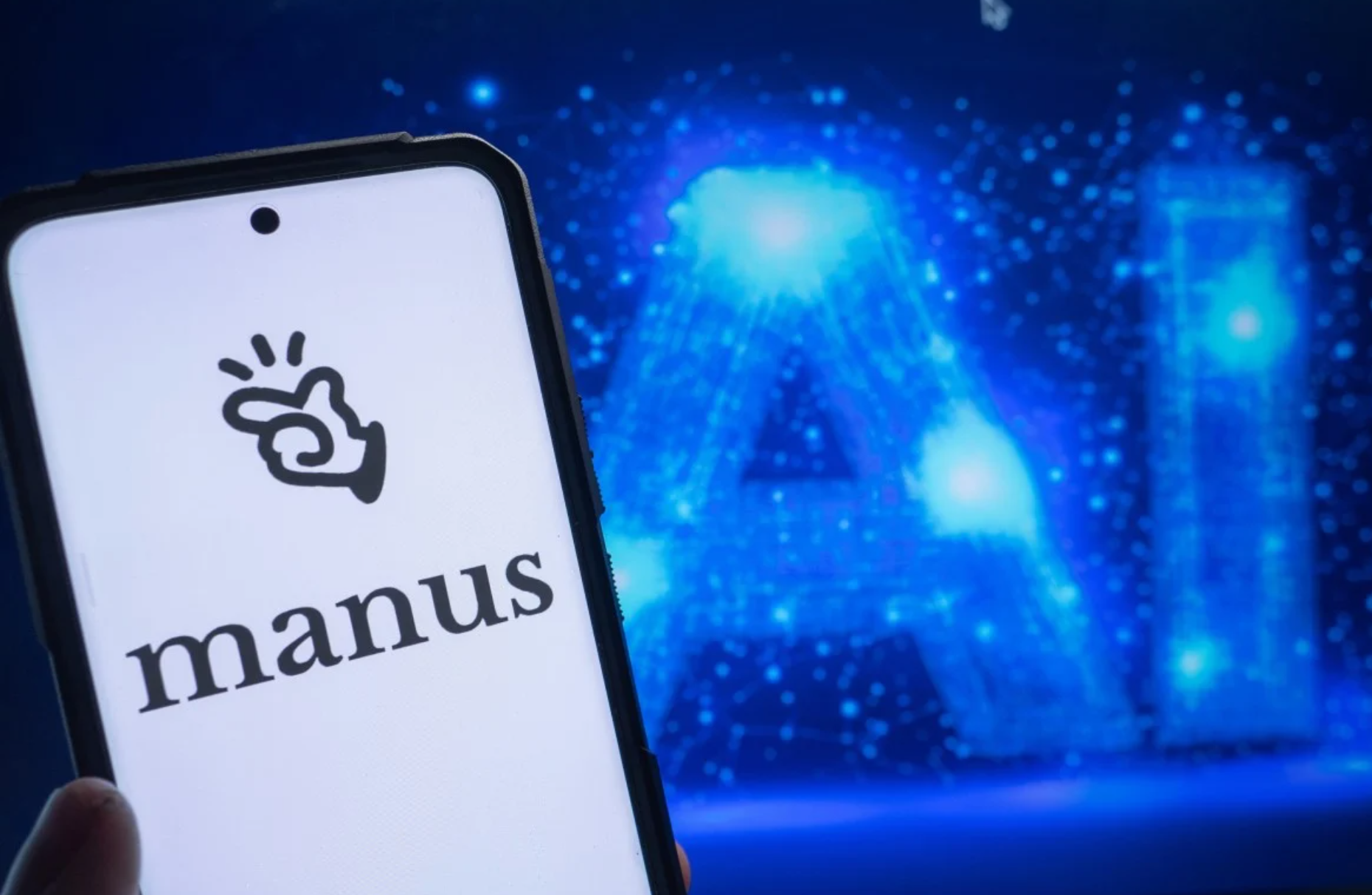
Today’s AI Tech News Digest: February 26, 2026
The Dawn of Agentic Intelligence
The AI landscape shifted fundamentally today. For years, we have watched as Large Language Models (LLMs) evolved from simple text generators to sophisticated chatbots. On February 26, 2026, the narrative officially changed from “chatting” to “doing.” The industry’s biggest players released updates that signal a definitive move toward Agentic AI—systems that don’t just process information but autonomously plan, execute, and complete complex workflows. From OpenAI’s long-awaited GPT-5 beta to massive infrastructure upgrades by NVIDIA, today’s news underscores a critical inflection point: AI is stepping out of the browser and into the operating systems of our lives. For developers and enterprise leaders, this means rethinking not just tools, but entire organizational workflows.

Top 10 News Stories
1. OpenAI Launches GPT-5 Beta with Native “Agent” Capabilities
OpenAI has officially kicked off the beta program for GPT-5, its most frontier model to date. Unlike previous iterations focused primarily on reasoning and text generation, GPT-5 introduces a native “Agent Mode” that allows the model to autonomously browse the web, execute code via secure sandboxes, and interface directly with APIs to complete multi-step tasks without user intervention. Early reports suggest a drastic reduction in hallucination rates and a significant leap in long-context memory (up to 10 million tokens).
Why it matters: This moves OpenAI from a chat interface provider to an operating system for tasks. By enabling the AI to “do” rather than just “say,” OpenAI challenges traditional automation software like UiPath and Zapier. It also raises new security questions regarding autonomous AI agents interacting with sensitive data.
Source & Reference: OpenAI Official Blog | OpenAI
2. EU Commission Issues First Major Fine Under AI Act
The European Commission has announced a historic €60 million fine against a major tech giant for violations of the EU AI Act. The fine targets the unauthorized deployment of prohibited emotion-recognition systems in workplace surveillance software. This marks the first enforcement action of its scale since the Act came into full force earlier this year, setting a precedent for global AI regulation.
Why it matters: This is a wake-up call for the industry. The EU is no longer just drafting rules; it is enforcing them with heavy financial penalties. Companies worldwide will need to accelerate their compliance audits, specifically regarding “high-risk” AI systems and prohibited subliminal techniques. This could slow down the deployment of certain biometric AI features in consumer products.
Source & Reference: European Commission Press Release | Reuters
3. NVIDIA Unveils “Rubin” Architecture and “Blackwell Ultra” Chips
At a specialized GTC keynote in Tokyo, NVIDIA CEO Jensen Huang revealed the Rubin architecture, the successor to the current Blackwell platform. Rubin promises a 30% increase in energy efficiency and support for FP4 precision, crucial for running massive inference models at consumer scale. Simultaneously, they announced the immediate availability of “Blackwell Ultra,” a stopgap chip optimized for large-scale agentic workloads.
Why it matters: As AI models become more complex (like GPT-5), the compute demand is exploding. NVIDIA’s focus on energy efficiency addresses the growing environmental and cost concerns of data centers. This hardware update is the fuel required to run the “agentic” software announced today.
Source & Reference: NVIDIA Technical Blog | TechCrunch
4. Meta Releases Llama 4 with “Open Weights” and Multimodal Mastery
Meta has released Llama 4, a 400 billion parameter model that is being released with “open weights” (though not fully open source). The standout feature is its native multimodality—it can process audio, video, and text simultaneously without separate encoders. Meta claims Llama 4 matches GPT-4 Turbo’s performance on benchmarks while being significantly cheaper to fine-tune.
Why it matters: Meta continues to be the counter-weight to proprietary models from OpenAI and Google. By offering a top-tier multimodal model with accessible weights, Meta empowers the developer community to build specialized applications on-premise, avoiding data sovereignty issues associated with cloud APIs. This intensifies the “Open vs. Closed” AI war.
Source & Reference: Meta AI Blog | The Verge
5. Google DeepMind’s “Genie 2” Generates Interactive 3D Worlds from Text
Google DeepMind unveiled Genie 2, a foundation world model capable of generating interactive, navigable 3D environments from a single text prompt or image. Unlike static video generators, Genie 2 creates a persistent physics simulation where users can move objects and change lighting in real-time. It is positioned as a training ground for embodied AI agents.
Why it matters: This bridges the gap between digital AI and physical robotics. Training robots in the real world is expensive and slow; Genie 2 offers an infinite supply of synthetic training data. This could accelerate the development of autonomous vehicles and humanoid robots by years.
Source & Reference: DeepMind Project Page | Wired

6. Microsoft 365 Copilot Now Features “Autonomous Meeting Summaries”
Microsoft has pushed a significant update to Microsoft 365 Copilot, introducing “Autonomous Meeting Agents.” These agents can attend Teams meetings on a user’s behalf, take nuanced action items, and even negotiate calendar conflicts with other agents. The feature is opt-in but is enabled by default for Enterprise E5 licenses starting next month.
Why it matters: We are entering an era of “Agent-to-Agent” communication. While this boosts productivity, it fundamentally changes office dynamics. Employees may feel pressure to send AI representatives to meetings, potentially devaluing human presence. It also creates a new security vector where rogue agents could access sensitive corporate strategy if not properly gated.
Source & Reference: Microsoft 365 Roadmap | ZDNet
7. Anthropic Launches “Claude 4 Research” for Scientific Discovery
Anthropic released Claude 4 Research, a variant of their model specifically fine-tuned for scientific literature review and hypothesis generation. It includes a “Citation Engine” that links every claim directly to peer-reviewed papers via a partnership with major academic publishers. It claims to have reduced error rates in scientific data synthesis by 40% compared to standard models.
Why it matters: As AI is increasingly used in science, “hallucinations” are unacceptable. Anthropic is targeting the high-value vertical of R&D, distinguishing itself from general-purpose models. This focus on verifiable truth suggests a market segmentation where “accuracy” becomes a premium product feature over “creativity.”
Source & Reference: Anthropic News | Nature
8. Tesla Optimus Gen 3 Begins Mass Production at Gigafactory Texas
Tesla confirmed that Optimus Gen 3 humanoid robots have entered mass production. The new generation features 50% finer motor control for delicate tasks like assembling electronics and improved battery life allowing for 16 hours of shift work. The first batch of 1,000 units is destined for Tesla’s own factories to automate the vehicle assembly line.
Why it matters: This is the real-world application of the robotics research we’ve seen for years. By using their own robots to build cars, Tesla creates a feedback loop that will likely accelerate the robot’s capabilities faster than competitors relying solely on lab testing. It signals a potential shift in human labor dynamics in manufacturing.
Source & Reference: Tesla Investor Relations | Bloomberg
9. OpenAI and SoftBank Form “Robotics JV” to Advance Consumer Androids
In a surprising partnership, OpenAI and SoftBank announced a Joint Venture (JV) to develop the “brain” for the next generation of consumer androids. SoftBank will handle the hardware (leveraging their subsidiaries like ARM), while OpenAI will provide the agentic models to control the robots in home environments.
Why it matters: SoftBank’s Masayoshi Son has long predicted the Singularity. Partnering with OpenAI suggests a belief that software is the differentiator in robotics, not just mechanics. This JV could standardize the operating system for home robots, much like Android did for smartphones, creating a massive new ecosystem for developers.
Source & Reference: SoftBank Group News | Financial Times
10. New “AI Watermarking” Standard Adopted by Coalition for Content Provenance
The Coalition for Content Provenance and Authenticity (C2PA) released a new technical standard for watermarking AI-generated content. Major players including Adobe, Sony, and OpenAI have committed to embedding metadata in audio, video, and image files that survive resizing and format changes, allowing users to verify if content is synthetic.
Why it matters: With the 2026 election cycle heating up globally, disinformation is a top concern. A unified, industry-standard watermark that survives editing is crucial for social media platforms to flag synthetic media. This technical step is vital for preserving trust in digital media, though enforcement remains a challenge.
Source & Reference: C2PA Official Specification | Ars Technica
Editor’s Pick: The Agentic Shift
Why OpenAI’s GPT-5 Beta Changes Everything
While the headlines are filled with hardware specs and regulatory fines, the most consequential story today is the quiet beta rollout of OpenAI’s GPT-5 “Agent Mode.” For the past two years, AI has been a passive tool—we prompt, it responds. Today marks the transition to AI as an active participant.
The introduction of native agentic capabilities—where the model can write code, execute it, debug its own errors, and interface with APIs to book flights or manage servers—fundamentally alters the value proposition of AI. It moves the technology from a “copilot” (navigation assistant) to an “autopilot” (doer).
For the enterprise, this is a double-edged sword. The efficiency gains are staggering: a marketing team could deploy an agent that researches trends, writes copy, generates images, and schedules posts autonomously. However, the risk profile changes entirely. We are no longer worried about an AI making a rude comment in a chat; we are worried about an AI accidentally deleting a production database or authorizing a large transfer.
This shift will force a rapid evolution in “AI Governance” departments. We will move from “prompt engineering” teams to “agent supervision” teams. The winners of the next decade will not be those with the best models, but those who build the safest “guardrails” around these autonomous agents. Today, the autopilot was switched on. Now, we have to learn to trust it.
Quick Glance
- Hugging Face Secures $500M Series D: The AI platform giant raised new funding to expand its enterprise inference platform, competing directly with AWS Bedrock. [Source: TechCrunch]
- Stability AI Releases Stable Diffusion 4: The image generation model now supports real-time video generation at 4K resolution. [Source: Stability AI Blog]
- Apple Acquires VisionPro AI Startup: Apple purchased a small startup specializing in foveated rendering for AR to boost Apple Intelligence spatial computing. [Source: MacRumors]
- IBM Watsonx Revamps Code Assistant: IBM released a new version of its coding assistant focused on COBOL modernization for banking. [Source: IBM Press Release]
- Research Paper: “Liquid Time Constants”: A new MIT paper proposes a way to make RNNs competitive with Transformers in efficiency. [Source: arXiv]
- Salesforce Agentforce Goes GA: Salesforce’s autonomous agent platform for customer service is now globally available. [Source: Salesforce]
- NVIDIA & AMD Joint Standard: The two rivals agreed on a new standard for interconnects in AI data centers to improve compatibility. [Source: HPC Wire]
Key Trends Summary
Today’s news highlights a clear trend towards Autonomous Agentic AI backed by specialized hardware and tightened regulatory enforcement.
Information# Agentic AI# AI News# AI regulation# AI trends 2026# AI watermarking# artificial intelligence today# Claude 4# enterprise AI# EU AI Act# Google DeepMind Genie 2# humanoid robotics# Llama 4# machine learning research# Nvidia Rubin# OpenAI GPT-5# tech news digest# Tesla Optimus
© Copyright notes
The copyright of the article belongs to the author, please do not reprint without permission.
Related posts



No comments...