
The Companion in Your Pocket: A Deep Dive into ChatGPT, the AI That Started a Revolution
The Companion in Your Pocket: A Deep Dive into ChatGPT, the AI That Started a Revolution
Remember the last time you were staring at a blank screen, the cursor blinking mockingly as you tried to draft an email, brainstorm a presentation, or simply understand a complex concept? That moment of creative or intellectual friction is a universal human experience. Now, imagine having a tireless, knowledgeable partner available 24/7 to help you push through those barriers. This isn’t a glimpse into a distant future; it’s the present reality, largely shaped by one tool: ChatGPT.
Developed by OpenAI, ChatGPT burst onto the scene in late 2022 and fundamentally altered the public’s perception of artificial intelligence. It transformed AI from a nebulous concept powering search algorithms and recommendation engines into a conversational partner you could actually talk to. But after the initial hype, is ChatGPT still the go-to AI assistant? Does it live up to its promise of being a universal tool for productivity and creativity? In this review, we’ll move beyond the headlines and put ChatGPT through its paces to see who it’s really for.
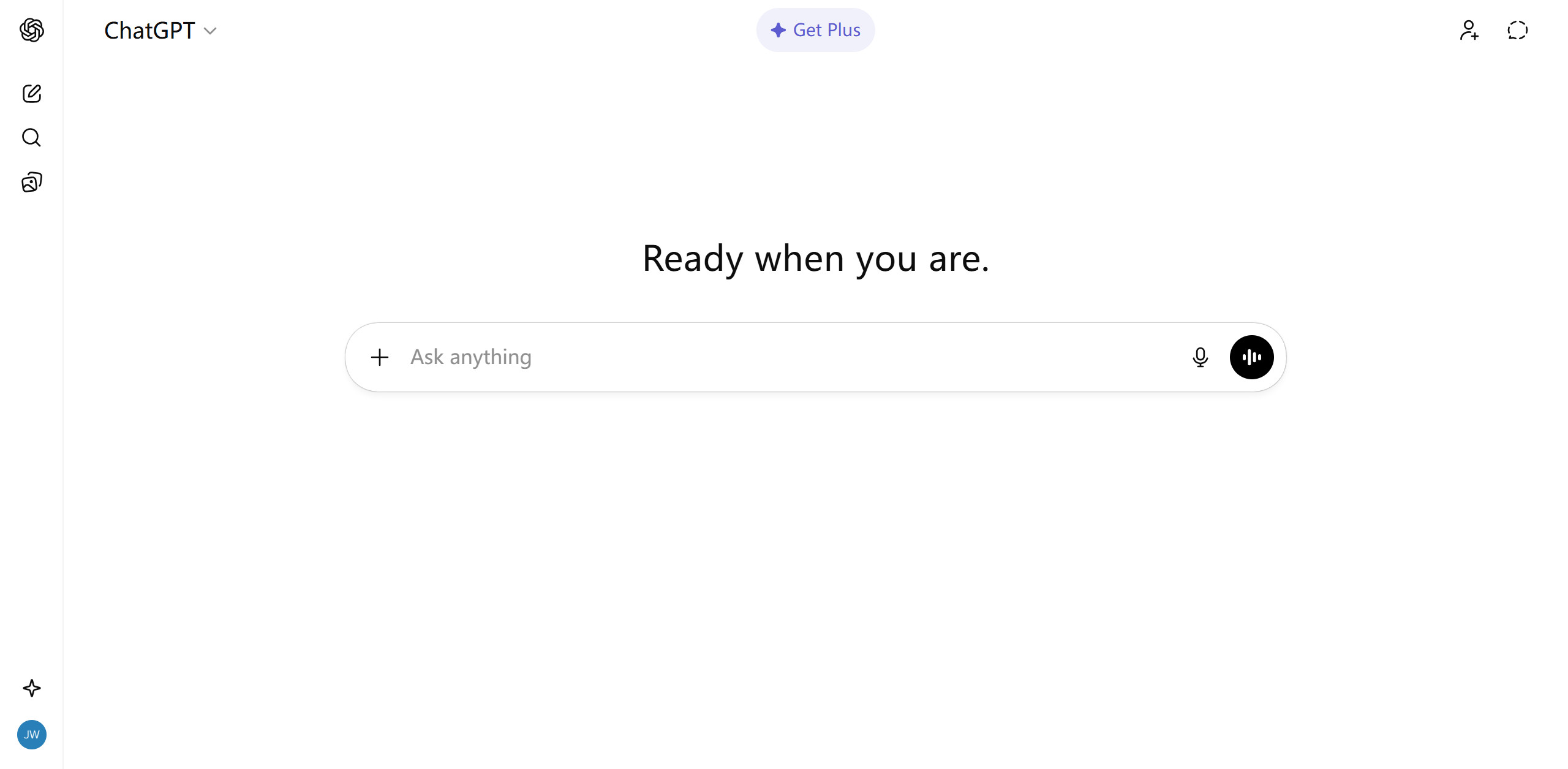
What Exactly Is ChatGPT?
At its core, ChatGPT is a highly advanced language model, specifically a variant of OpenAI’s GPT (Generative Pre-trained Transformer) architecture. In simpler terms, it’s a massive neural network trained on a significant portion of the internet’s text data. This training allows it to understand and generate human-like text based on the prompts it receives.
Its unique positioning stems from its “chat” format. Unlike earlier AI models that might produce a single block of text, ChatGPT is designed for multi-turn conversations. It remembers the context of your discussion, allowing you to ask follow-up questions, request revisions, or change topics fluidly. A critical recent update is its move towards multimodality. While the core experience is text-based, paying subscribers (ChatGPT Plus) can interact with the model using images and voice, making it a more versatile sensory tool.
OpenAI, its creator, has evolved from a non-profit research lab to a capped-profit company, with significant backing from Microsoft. This partnership has fueled rapid development but also sparked ongoing debates about the openness and future direction of AI, a context that is important for any informed user.
Hands-On: From Sign-Up to Daily Driver
Getting Started: A Breeze
The barrier to entry is practically non-existent. You simply visit the OpenAI website, create an account with an email address or a social login, and you’re in. The free tier is available immediately, though it utilizes a slightly less powerful model (GPT-3.5) and has usage limits during peak times. The interface is clean and intuitive: a simple text box at the bottom of the screen invites you to start a conversation. It’s so straightforward that there’s virtually no learning curve.
The Real Test: Putting ChatGPT to Work
To evaluate its capabilities beyond simple queries, I devised three practical tasks that reflect common use cases.
Task 1: The Creative Co-Writer
- Prompt: “Write a compelling, short marketing email for a new project management software called ‘FlowSpace.’ The email should target small business owners and highlight ease of use and time savings. Use a friendly but professional tone.”
- The Process & Results: Within seconds, ChatGPT generated a complete email with a subject line, greeting, body copy with bullet points, and a call-to-action button. The text was coherent, on-brand, and grammatically flawless. However, the first draft was a bit generic. I followed up: “That’s good, but make it less corporate. More relatable, like you’re talking to a friend who’s overwhelmed with spreadsheets.” The model instantly revised the email, injecting more personality and specific pain points. The speed and quality of this iterative process are where ChatGPT truly shines.
Task 2: The Research Assistant
- Prompt: “I have uploaded a PDF of a scientific article about CRISPR gene editing. Summarize the key findings in three bullet points and explain the potential ethical implications in simple terms.” (Note: This test was conducted using the file upload feature available to Plus users).
- The Process & Results: After uploading the PDF, ChatGPT quickly processed the text. The summary it provided was accurate and concise. The explanation of ethical implications was clear and balanced, using analogies like “editing the source code of life” to make the concept accessible. This functionality is a massive time-saver for students and professionals, though it’s crucial to fact-check the output, as the model can sometimes “hallucinate” or misinterpret complex data.
Task 3: The Explainer-in-Chief
- Prompt: “Explain how a blockchain works, but do it as if you’re talking to a 10-year-old. Use a metaphor involving a public diary.”
- The Process & Results: This is where ChatGPT’s ability to abstract complex ideas becomes apparent. It crafted a brilliant analogy: Imagine a diary where anyone can write an entry (a transaction). Each new page is linked to the previous one, and once a page is full, it’s sealed with a unique wax stamp (a hash) that depends on the contents of all previous pages. If someone tries to change an old entry, the wax stamp would break, and everyone would know. This was a perfect, intuitive explanation that demonstrated a deep understanding of the concept, not just keyword matching.
ChatGPT vs. The Competition: How Does It Stack Up?
The most direct comparison is with other AI chatbots, notably Google’s Gemini.
- vs. Google Gemini: Gemini is a formidable competitor, deeply integrated with Google’s search engine. Its major advantage is real-time web access (even on the free tier, at times), providing more current information than ChatGPT’s free version. However, ChatGPT, especially the GPT-4 model available to Plus subscribers, often feels more nuanced and creative in its writing. It generally produces text that is better structured and more natural. ChatGPT’s ecosystem of custom GPTs also offers a level of specialization that Gemini is still catching up to.
The key takeaway is that ChatGPT excels in creative text generation and nuanced conversation, while Gemini has an edge in tasks requiring up-to-date information from the web. Your choice depends on your primary need.
The Verdict: Strengths and Shortcomings
Strengths:
- Unmatched Conversational Fluency: The ability to have a continuous, context-aware dialogue is its killer feature. It feels less like querying a database and more like collaborating with a person.
- Versatility: From writing code and poetry to planning trips and explaining physics, its range is astonishing. It’s a true jack-of-many-trades.
- Rapid Iteration: The speed at which it can generate and refine content is a massive productivity booster for writers, marketers, and developers.
- Strong Ecosystem: The introduction of custom GPTs allows users and developers to create tailored versions for specific tasks, from a creative writing coach to a technical interview preparer.
Shortcomings:
- The “Hallucination” Problem: The model can confidently generate plausible-sounding but completely incorrect information. Fact-checking is non-negotiable.
- Outdated Knowledge (Free Tier): The free version of ChatGPT has a knowledge cutoff date, meaning it’s unaware of recent events. You need a Plus subscription for web browsing.
- Lack of True Understanding: While it mimics understanding brilliantly, it doesn’t comprehend meaning in a human sense. This can lead to logical errors in complex reasoning tasks.
Final Thoughts: Who Is This For?
ChatGPT is not a sentient oracle; it’s a powerful tool. Its value depends entirely on how you use it.
- Content Creators & Marketers: An indispensable brainstorming and drafting assistant. 5/5
- Students: A fantastic tutor for explaining concepts and summarizing information (when used ethically). 4/5
- Developers & Programmers: A powerful pair-programmer for debugging, writing boilerplate code, and learning new languages. 5/5
- Curious Learners: A patient explainer of countless topics. 4/5
- General Users: A handy tool for drafting emails, planning meals, or generating ideas. 4/5
Overall Score: 4.5 / 5 Stars
- Ease of Use: 5/5
- Functionality: 5/5
- Innovation: 5/5
- Reliability (factual accuracy): 3/5
ChatGPT remains the leader in the AI assistant space for a reason. It’s the most polished, conversational, and creatively capable tool available to the public. Don’t just read about it—go to the OpenAI website and start a conversation. You’ll be amazed at what you can co-create.
Let’s Discuss!
What has been your most surprising or useful interaction with ChatGPT? Share your story in the comments below!
Further Reading:
© Copyright notes
The copyright of the article belongs to the author, please do not reprint without permission.
Related posts





No comments...