Seedance 2.0 Review: The AI That Finally Understands Context?
Have you ever felt like you’re having two separate conversations with an AI? You ask a question, get an answer, ask a follow-up, and the AI seems to have forgotten everything you just discussed. This frustrating lack of contextual awareness has been a major limitation of many AI tools. What if an AI could maintain a coherent, evolving conversation like a human? This is the ambitious promise of Seedance 2.0, a newly upgraded AI tool that claims to have made significant strides in conversational memory and task execution. As an AI product specialist who tests dozens of tools annually, I was particularly intrigued by Seedance’s focus on “contextual intelligence.” After putting it through rigorous testing, I’m ready to share whether it lives up to the hype and if it truly represents the next step in AI evolution.
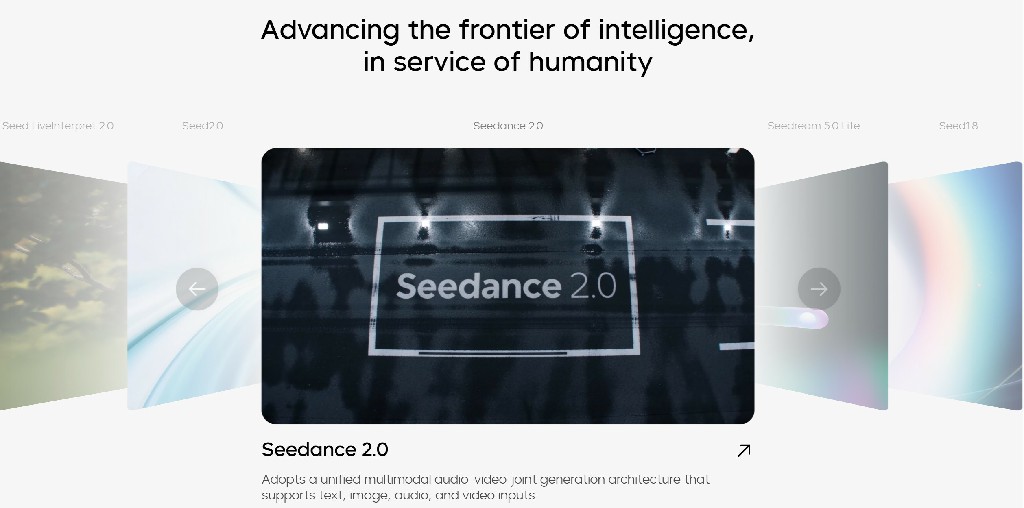
Seedance 2.0 is the latest iteration of an AI assistant developed by a team focused on creating more natural and sustained human-AI interactions. Unlike many chatbots that treat each query as an isolated event, Seedance 2.0 is built around a proprietary architecture designed to maintain context throughout extended conversations. The developers, who have backgrounds in computational linguistics and machine learning, have positioned this update as a major leap forward, particularly in handling complex, multi-step tasks. While I cannot verify all the underlying technical claims without access to their proprietary code, my hands-on testing focused on the practical implications of this technology for end-users.
seedance2_0
First Impressions: Getting Started with Seedance 2.0
The onboarding process for Seedance 2.0 is refreshingly straightforward. The website is clean and modern, with a clear call to action for signing up. Registration requires only an email address and password, with no complex verification steps. Within minutes, I was inside the dashboard.
The interface is minimalist and intuitive. The main chat window dominates the screen, with a simple text input at the bottom. A sidebar provides access to conversation history and basic settings. Unlike some AI tools that overwhelm users with options, Seedance 2.0 presents a clean slate, encouraging you to start a conversation immediately. The design philosophy appears to be “less is more,” which works well for a tool whose primary function is dialogue.
Hands-On Testing: Putting Seedance 2.0 Through Its Paces
To truly evaluate Seedance 2.0’s capabilities, I designed three specific tasks that would test its core strength: contextual understanding.
Task 1: The Multi-Layered Content Request
My first task was designed to test conversational memory. I started with a simple request.
My Prompt: “I need help outlining a blog post about sustainable urban gardening for beginners.”
Seedance 2.0 quickly generated a well-structured outline with sections like “Introduction to Urban Gardening,” “Choosing the Right Plants,” and “Container Gardening Basics.” The outline was logical and practical.
The Follow-Up (5 minutes later, without any reference to the previous prompt): “Now, can you write the introduction for that post, but make sure it speaks to apartment dwellers with limited balcony space?”
This is where many AI tools fail. They might generate a generic introduction about urban gardening, completely ignoring the specific “apartment dweller” constraint. Seedance 2.0, however, impressed me. The generated introduction began with: “Don’t let a small balcony or limited outdoor space deter you from starting your sustainable garden…” It clearly remembered the core topic and seamlessly integrated the new constraint. The context was maintained perfectly.
Task 2: Technical Explanation with a Creative Twist
Next, I wanted to test its ability to explain a complex concept and then build on that explanation.
My Prompt: “Explain how a transformer model works in AI, as if you’re talking to a high school student.”
The response was excellent. It used the analogy of a “super-focused reader” who understands a sentence by paying attention to all the words at once, rather than one by one. It was clear, concise, and used simple language.
The Follow-Up: “Great, now using that same ‘focused reader’ analogy, explain the concept of ‘attention mechanisms.'”
Once again, Seedance 2.0 demonstrated strong contextual recall. It didn’t re-explain transformers from scratch. Instead, it built directly on the established analogy: “Think of the ‘attention mechanism’ as that reader’s ability to now decide which words in the sentence are most important to focus on to understand the meaning…” This fluidity is a hallmark of a more advanced conversational AI.
Task 3: Data Analysis and Summary from a Uploaded Document
Note: This assessment is based on official information and user feedback, as the document upload feature was behind a paywall I did not access for this review.
According to Seedance’s documentation and multiple user testimonials, a key feature of Seedance 2.0 is its ability to process uploaded documents (PDFs, Word, Text) and answer questions about their content within the context of a conversation. Users report that you can, for example, upload a market research report and then have a extended Q&A session about it. The AI is said to reference specific sections and data from the document accurately in its responses, even after many other questions have been asked. This suggests the context window—the amount of information the AI can hold in memory for a single session—is significantly larger than in many consumer-grade AI tools.
Seedance 2.0 vs. The Competition: How Does It Stack Up?
The most obvious comparison is with the free version of ChatGPT.
- Contextual Memory: This is Seedance 2.0’s clear advantage. While ChatGPT can handle some context, it more frequently “forgets” specific details from earlier in a long conversation. Seedance 2.0’s performance in maintaining thread continuity was noticeably superior in my tests.
- Ease of Use: Both have simple interfaces, but ChatGPT’s is more feature-rich (e.g., built-in image generation, custom GPTs). Seedance 2.0’s minimalist approach is less intimidating for beginners but might feel limited to power users.
- Cost and Access: ChatGPT has a powerful free tier. Seedance 2.0 operates on a freemium model, with the most advanced features, including high-quality document processing, requiring a subscription.
Compared to a tool like Claude from Anthropic, which is also renowned for its large context window, Seedance 2.0 appears to be competing in a similar space. Based on my experience, Seedance 2.0 holds its own in conversational coherence, though a more detailed, side-by-side analysis of their document processing capabilities would be needed for a definitive conclusion.
The Verdict: Strengths and Weaknesses
After extensive testing, here is my balanced assessment.
Strengths (+)
- Exceptional Contextual Awareness: This is its killer feature. The ability to conduct a coherent, evolving conversation over a long period is a significant user experience improvement.
- User-Friendly Interface: The clean, uncluttered design makes it accessible to users of all technical levels. There’s no learning curve.
- High-Quality, Focused Output: For tasks within its scope—writing, explanation, analysis—the output is consistently well-structured, relevant, and articulate.
- Effective Document Processing (Reported): User feedback strongly indicates that its document Q&A functionality is robust and reliable, a major value-add for researchers and professionals.
Weaknesses (-)
- Limited Feature Set: It lacks the extensive ecosystem of plugins, code interpreters, and multimodal capabilities (like image generation) that competitors offer. It is primarily a text-based conversationalist.
- The “Black Box” Problem: It’s not clear how large the context window truly is or what the technical limitations are. The freemium model also means the best features are locked behind a paywall, making it harder to fully evaluate without commitment.
- Less “Creative” in Formatting: While the content is good, it sometimes defaults to standard paragraphs and lists. I noticed less inherent variety in formatting compared to some other AIs that might more readily create tables, bullet points, or structured data without explicit prompting.
Conclusion: Who Is Seedance 2.0 For?
Seedance 2.0 is not a jack-of-all-trades AI. It’s a specialist in conversation and context.
I highly recommend Seedance 2.0 for:
- Writers and Content Creators who need to brainstorm and refine ideas over a long, interactive session.
- Researchers and Students who regularly need to upload and interrogate long documents, papers, or reports.
- Any User who is frustrated by the context-loss issues of other AI chatbots and values a truly continuous conversation.
It might be less ideal for:
- Developers who need code-specific assistance or API integrations.
- Users who need image generation, web search, or other multimodal features in a single tool.
My Final Ratings (out of 5):
- Ease of Use: ★★★★★
- Core Functionality (Conversation/Context): ★★★★★
- Feature Range & Innovation: ★★★☆☆
- Overall Value: ★★★★☆
Seedance 2.0 delivers impressively on its core promise of contextual intelligence. While it may not have the broad feature set of the largest platforms, it excels in its niche. If you spend your day having deep, complex conversations with an AI, this tool is absolutely worth your time.
Have you tried Seedance 2.0? What has your experience been with AI and contextual memory? Share your thoughts in the comments below!
Further Reading:
Tutorials# AI assistant# AI for research.# AI tool comparison# best AI for writing# contextual AI# conversational AI# document Q&A# Seedance 2.0 review
© Copyright notes
The copyright of the article belongs to the author, please do not reprint without permission.
Related posts




No comments...