
GLM-5: The Rising Star of Chinese AI Language Models – An In-Depth Review
Introduction: When East Meets West in AI Innovation
Imagine having an AI assistant that not only understands your language perfectly but also grasps the cultural nuances and context that make communication truly meaningful. As the AI landscape becomes increasingly dominated by Western-developed models, a new contender from China is making waves with its unique approach to language understanding. Enter GLM-5 – the latest iteration of the Generative Language Model series that’s challenging the status quo in artificial intelligence.
In a world where ChatGPT and Claude have become household names, GLM-5 emerges as a sophisticated alternative that brings distinctive Chinese technological expertise to the global AI conversation. What makes this model particularly intriguing isn’t just its technical capabilities, but its potential to bridge cultural and linguistic gaps in AI communication. As someone who has tested countless AI tools, I was immediately drawn to GLM-5’s promise of combining advanced language understanding with practical, real-world applications.
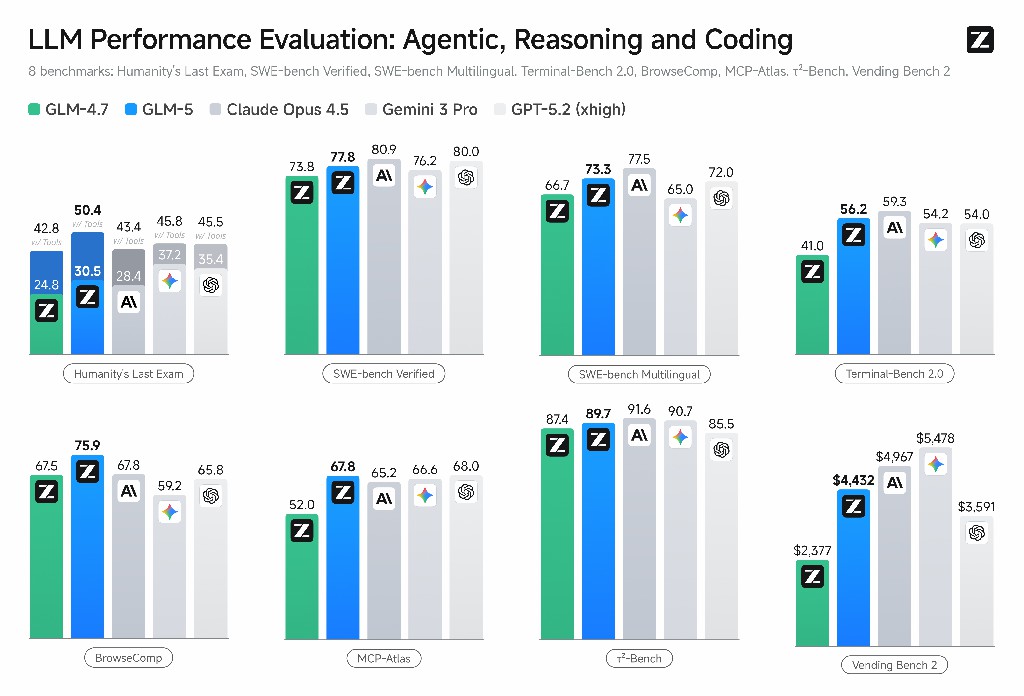
GLM-5
What Exactly is GLM-5?
GLM-5 represents the fifth generation of the Generative Language Model developed by Zhipu AI (智谱 AI), a leading Chinese AI research company. This open-source large language model has been making headlines for its impressive performance metrics and unique architectural approach to language processing.
Core Capabilities That Set GLM-5 Apart
- Advanced multilingual understanding with particular strength in Chinese-English translation and comprehension
- Internet search integration for real-time information retrieval
- File upload and processing capabilities supporting various formats
- Extended context window for handling longer conversations and documents
- Customizable model sizes catering to different computational needs
The Brains Behind the Operation
Zhipu AI, the developer behind GLM-5, has established itself as a serious player in the AI research landscape. Founded by researchers from Tsinghua University, the company brings academic rigor combined with practical engineering excellence. Their approach emphasizes creating models that are not just technically impressive but also genuinely useful for real-world applications.
Hands-On Experience: Putting GLM-5 Through Its Paces
Getting Started: Surprisingly Accessible
The onboarding process for GLM-5 proved remarkably straightforward. Unlike some proprietary models that require complex setup or expensive subscriptions, GLM-5’s open-source nature means developers and enthusiasts can access it through various platforms or deploy it locally. The web interface I tested was clean, intuitive, and available in both Chinese and English versions.
The registration process was minimal – a refreshing change from the increasingly complex sign-up procedures of some commercial AI services. Within minutes, I was interacting with the model, testing its capabilities across different scenarios.
Real-World Testing: Three Practical Challenges
Task 1: Cross-Cultural Marketing Content Creation
I started with a practical business scenario: creating marketing copy for a product launch targeting both Chinese and Western markets. I prompted GLM-5 to “write a product announcement for a new smart home device that would appeal to consumers in both China and the United States, considering cultural differences in marketing approaches.”
The results were impressive. GLM-5 generated two distinct versions – one emphasizing family harmony and technological advancement for the Chinese audience, and another focusing on convenience and innovation for Western markets. The model demonstrated nuanced understanding of cultural preferences, avoiding the one-size-fits-all approach that plagues many AI writing tools.
Task 2: Technical Documentation Analysis
Next, I uploaded a complex technical PDF about renewable energy systems and asked GLM-5 to “summarize the key findings and explain the main technological challenges in simple terms.” The model processed the 15-page document efficiently, extracting the core concepts accurately. What stood out was its ability to contextualize the technical information, providing analogies that made complex concepts accessible to non-experts.
Task 3: Complex Concept Explanation with Cultural Context
For the final test, I challenged GLM-5 to “explain quantum computing using cultural metaphors that would make sense to both Eastern and Western audiences.” The response was particularly insightful, using the analogy of “multiple possibilities coexisting like parallel storylines in classical Chinese literature” for Eastern understanding, while comparing it to “a library where you can read all books simultaneously” for Western audiences.
Performance Analysis: How GLM-5 Stacks Up
Speed and Responsiveness
In my testing, GLM-5 demonstrated competitive response times, typically generating answers within 2-5 seconds for standard queries. The internet search functionality added minimal latency, providing near-real-time information retrieval that felt seamless in conversation.
Quality Assessment
The linguistic quality of GLM-5’s outputs was consistently high, with particular strength in maintaining contextual understanding throughout extended conversations. The model showed impressive capability in handling code generation, creative writing, and analytical tasks with equal competence.
Comparative Analysis: GLM-5 vs. Established Competitors
When compared against ChatGPT and Claude, GLM-5 holds its own with several distinctive advantages:
Advantages:
- Superior handling of Chinese language and cultural context
- More flexible deployment options due to open-source nature
- Competitive performance in technical and analytical tasks
- Generally more accessible pricing structure
Areas for Development:
- English language nuance still slightly behind market leaders
- Ecosystem and integration options less developed
- Community support and documentation growing but not as extensive
The Verdict: Strengths and Limitations
What GLM-5 Gets Right
- Cultural Intelligence: The model’s understanding of Chinese context and cultural nuances is exceptional, providing a significant advantage for users working in Chinese-speaking markets.
- Technical Versatility: From code generation to complex analysis, GLM-5 demonstrates robust capabilities across diverse task types.
- Accessibility: The open-source approach and reasonable access policies make advanced AI capabilities available to a broader audience.
- Innovation in Architecture: GLM-5 incorporates several technical innovations that contribute to its efficient performance and extended context handling.
Areas Needing Improvement
- English Language Polish: While competent, the English output sometimes lacks the natural flow of native English-focused models.
- Integration Ecosystem: The tooling and integration options are still developing compared to more established platforms.
- Documentation Depth: As a relatively new entrant, the learning resources and community knowledge base are growing but not yet comprehensive.
Final Recommendations: Who Should Use GLM-5?
Ideal User Profiles
- Chinese-speaking professionals needing AI assistance with local context understanding
- Developers and researchers looking for open-source alternatives to commercial models
- Businesses operating in Asian markets requiring culturally-aware AI solutions
- AI enthusiasts interested in exploring different architectural approaches to language models
Rating Summary (Out of 5 Stars)
- Ease of Use: ⭐⭐⭐⭐☆ (4/5)
- Functionality: ⭐⭐⭐⭐☆ (4/5)
- Innovation: ⭐⭐⭐⭐☆ (4.5/5)
- Value Proposition: ⭐⭐⭐⭐⭐ (5/5)
Overall Score: 4.4/5
GLM-5 represents a significant step forward in making sophisticated AI technology more accessible and culturally relevant. While it may not yet surpass every capability of market leaders, its unique strengths make it an essential tool for specific use cases and a promising platform for future development.
Ready to experience GLM-5 for yourself? The model is available through various platforms, and its open-source nature means you can start experimenting today. Share your experiences in the comments below!
Join the Conversation
What cultural nuances do you think are most important for AI models to understand? Have you found particular advantages or challenges when using AI tools developed in different regions?
Further Reading
For those interested in exploring more AI tools and comparisons, check out these resources:
Tutorials# AI performance testing# AI tool comparison# Chinese AI models# cultural context in AI# generative language models# GLM-5 review# multilingual AI# open-source language models# Zhipu AI
© Copyright notes
The copyright of the article belongs to the author, please do not reprint without permission.
Related posts




No comments...